DRAWINGS / CAD DATA
Share the latest available 2D drawings, 3D data and the revision currently intended for review.


PROJECT GUIDE
Share the drawings, material, quantity and target dates you have. Agree missing inputs, tooling requirements and sample criteria before manufacturing begins.
PROJECT INPUTS
Start with available information and identify what remains unknown: the part revision, resin, quantity, finish, interfaces or target dates.
Share the latest available 2D drawings, 3D data and the revision currently intended for review.
Identify the known material direction, performance context or constraints that may affect the part.
Explain where the part is used, what it must do and which interfaces or conditions matter.
Clarify visible surfaces, texture, color, finish and any downstream process expectations.
Describe whether the current need concerns samples, trial production or a broader production program.
Share known inspection, functional, appearance, documentation or acceptance requirements.
ENGINEERING REVIEW
Check draft, wall sections, parting, gates, interfaces and critical features against the current part data. Record the questions that need a design decision.

Illustrative technical references for discussing part requirements; no matched project relationship is established.
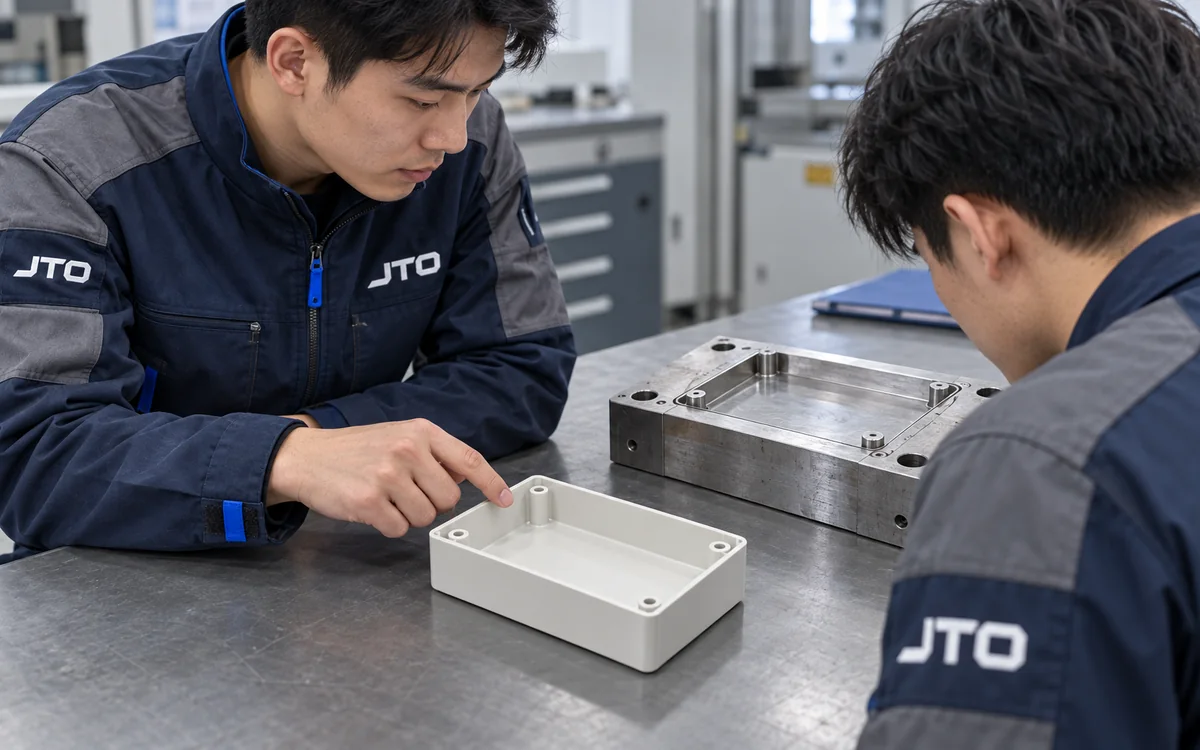
Tooling implications are considered against the part definition and current project context.

Illustrative visual review of a component and its features.
MANUFACTURING ALIGNMENT
The route depends on the part and project context. Tooling, molding, downstream work, assembly and verification may connect in different ways rather than following one fixed sequence.
PART REQUIREMENTS
ENGINEERING CONTEXT
Geometry · Material · Application · Revision · Critical requirementsAPPLICABLE MANUFACTURING ROUTE
Start with the current part definition and material requirements. Engineering review establishes tooling scope, trial inputs and the checks needed before production readiness. See the manufacturing alignment section for the review path.
Manufacturing alignmentQUALITY EXPECTATIONS
Agree critical dimensions, appearance references, required part-level tests and the records needed for acceptance.
View Inspection and QualityIdentify the features or interfaces that have a direct bearing on function, fit or acceptance.
Explain how the part is expected to perform within the relevant application context.
Clarify visible-surface, color, texture or finish references that form part of acceptance.
State any known measurement, functional or comparison method expected for review.
Describe the records, revision references or identification context required by the project.
Make the applicable approval reference or release basis visible before production expands.
PRODUCTION READINESS
Confirm the current drawing, sample findings, unresolved changes and approval responsibilities before the next production step.
The current drawing, data and revision are clear enough to support the next decision.
The applicable manufacturing route and unresolved process questions are visible.
Critical review and acceptance requirements are understood in the current project context.
Current changes, affected references and open decisions remain visible.
The communication path and responsibility for the next action are clear.
Include expected quantities, timing context and scope in your enquiry. Pricing, payment terms, delivery commitments and tooling ownership must be agreed for the specific project; this page does not establish those terms.
Discuss project termsRFQ PREPARATION
A complete package is helpful, but it is not required to begin a project review. Share the drawings, samples or requirements already available, and remaining questions can be clarified during review.

Illustrative drawing and component references. Send your own current files with the enquiry.
Identify the current drawing revision and any NDA or access restrictions before sharing sensitive information. The RFQ form does not accept file attachments.
Prepare an enquiryNo. Share the inputs available and identify what remains undecided. Missing details can be clarified during review.
No. Scope, requirements and acceptance criteria still require project-specific review.
DISCUSS YOUR PROJECT
Share what is already known. Missing details can be clarified during project review rather than hidden behind assumptions.